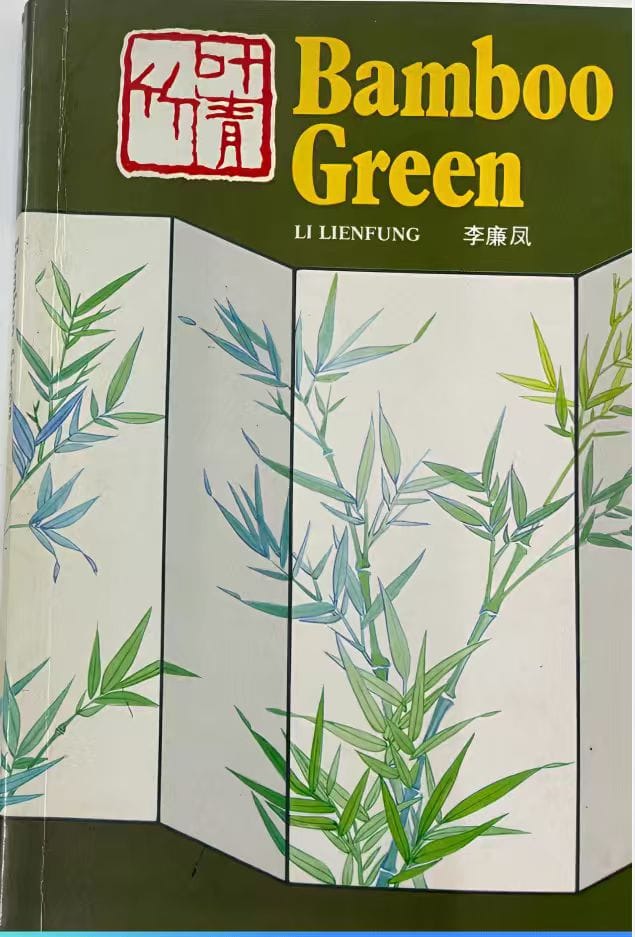
Bamboo Green 竹叶青
The Genesis of Bamboo Green
Sometime in August, 1979, two men who were both named Eddie came to call on me. The Eddie with a moustache introduced the Eddie without a moustache who asked me earnestly whether I would like to write a column for The Straits Times.
Would I! For someone who had been a working chemist for more than thirty years, this question stirred one of my secret passions which had been tucked away under the pillows since childhood.
If I had been a genius, either as a writer or as a scientist, life might have been simpler for me as a child for I would have known how to choose and plan my career. As it was, I was one of those students who did equally mediocre in both arts and science. However, thinking science might be more useful to me and possibly to the world, I turned to science, and in science I was stuck.
I might have started to write earlier, or at least tried to do so more earnestly, had I hated my work as a chemist, but as it turned out, I rather enjoyed it. But putting words to paper and allowing them to tell a yarn has always fascinated me. With my full-time job, three insufferably demanding children and a heavily-scheduled social life, I did not always find it easy to have the time and mood for writing. I did manage to produce enough articles and short stories to please the editor of a Hong Kong based magazine, but just as the first volume of my early writings came out in print, my father passed away. His death was followed closely by that of my mother.
Life must go on, so my life did. Work must not stop, so my work did not stop. But writing called for more than a will to live and a capacity to think. I had lost the two people whom I could rely on to appreciate my efforts no matter how puny, insignificant and crude they were. I suppose it had been their approval all along that had urged me to scribble deep into the night with nothing to show for it the next morning but tired eyes. Without them, writing seemed meaningless to me. Who else cared for a few hundreds words from me, one way or other?
Because I wanted to feel close to my parents even though they were dead, or especially because they were dead, I began writing Chinese poems of the classical style, not realizing how inadequate I was to cope with the rigid technical requirements of this form of poetry. A bachelor's degree in chemistry did not include any working knowledge of the Chinese classics, and a master’s degree in English literature did not provide any information on Chinese poetry. Nor was my secondary education in China any more profitable in these respects since we were taught reading and writing mostly in modern Chinese.
It was then that I began to read books on the techniques of Chinese poetry. To my surprise, I found that subjects even as dull as classifications of rhymes could be great fun so long as they were not studied under the shadow of worrying about meeting a certain standard. My only regret is that eventually I had to admit to myself that I was not the stuff poets are made of.
After a few years of floundering in the sea of Chinese poems, I grew impatient with the melancholy of poets and started to look around for subjects more relevant to the world I lived in. I was persuaded by friends to translate The Naked Ape from English into Chinese and, inspired by my European trips, to write travelogues. and some other articles which appeared in the newspapers of Hong Kong, Taiwan and Singapore. I was particularly gratified when my first and only play in English was staged in Singapore in 1977.In that same year, for a bet, I entered the play-writing competition held by the Ministry of Culture with my first and only Chinese play. To my amazement, it won the first prize, luring me into hoping that I might yet become a playwright at my age.
However, I was soon to learn the limitations of play writing. Without a theatrical group game enough to perform a new play, it cannot exist. Without the skilful interpretation of the director and actors, the characters cannot breathe life. Therefore, in spite of the excitement of planning and putting words into the mouths of the characters, the writing of a play is lonely and frustrating, because once it is completed, one has to wait for it to be used. I felt I was getting too old to wait.
That was why in August, 1979, I was at a loose end. When the two Eddies appeared and one of them asked if I wanted to write, my momentary hesitation was not because I did not want to, but because I did not think I could.
What could I write about? Surely not the chemical formulae of starch derivatives! Nor could I possibly squeeze a novel into a space calling only for a thousand words or so, assuming I even knew how to write a novel.
“Well,” explained one of the Eddies, “I thought...maybe...something little, something cute, something easy to read for the bilingual page ...to help those whose Chinese is not as good as their English or those whose English is not as good as their Chinese...”
I was immediately excited. Yes, I thought, I understood the problem since I had seen how some of our people forgetting what they had been taught in their secondary schools, relapsing sooner or later into using only one of the two languages as their means of communication. Was it possible that I could revive their interest? I knew I was not a scholar of Chinese or English, but perhaps my not being a scholar and my inability to write anything pedantic might just be what was needed to calm readers into not being intimidated by their second languages.
Also, I had always felt that the pressures of our school system, with its emphasis on examinations, killed the joy of learning and the pleasure of exploration, and robbed our children of their natural curiosity, reducing them into little monsters who knew the answers but did not know how to ask questions. Remembering how I had enjoyed searching and finding answers to the questions I had posed to myself, I thought my experiences might be helpful to those who had found Chinese or English dreary by introducing readings which might excite them to probe on their own.
That was how “Bamboo Green” was launched. Looking at this first volume, I wonder if, in its two years of existence in The Straits Times, “Bamboo Green” has really helped anyone or not. Whatever the answer, I have enjoyed putting my thoughts forward, sometimes seriously and sometimes frivolously. I wish to thank the two Eddies for having made it possible for me to write at all.
It is now up to my readers, if I have any, to buy this book and give my publishers a big surprise!
一九七九年八月初,两个名字都叫艾迪的大男人来看我。那个脸上挂了一撇横须的艾迪,做了一番介绍之后,那个不以胡子为荣的艾迪,便盛情可掬地问我:愿不愿意为《海峡时报》写一个专栏。
这还有什么愿意或不愿意的呢?这句话啊,在我这个为化学而工作了近三十年的人听来,实在问到我心坎里去了。我自幼就有写作的梦想,不过平日不敢放在口边,只能埋在枕头下面,有空时取出来看看。
若是我生下来便有一份才智,无论是对于科学,或是对于文学,我的童年生涯就可能简单得多了,因为我便可以凭此而计划如何选择职业,大做其白日梦呀。可惜我读书的时候,两者的成绩,都只是平平而已。在这样的情况之下,我终于选了科学之道,因为我听信一般人的想法:以为科学不论对自己和对世界,都比较实际,有用。就这样,我做了一个化学师。
如果我十分讨厌化学师的工作,也许我早就开始搞搞写作了;至少,我也会比较一心一意地去尝试一下吧。偏偏我又蛮喜欢我的职业。不过在白纸上写黑字,而让这些字来讲述一个故事,对我却一直有很大的诱力。好不辛苦地写了几篇散文与短篇小说,得到某香港杂志主编慧眼相看,不幸在我的作品刚刚集印成书的时候,我的父亲突然去世了;不久,母亲也与世长辞。悲痛之余,我不忘父母的遗训,生活继续正常,工作也不曾停顿。可是写作却是情感的发泄,不能全靠生命的意志和思考的能力。
于是我便开始转向作诗填词,只因为父母都爱唐诗宋词,使我觉得可以通过诗词,和他们亲近些。可是我没料到诗词还这么难哪。我没有丝毫关于诗词写作的基本常识,根本不知如何人手。
我只好大买《诗词入门》一类的浅近书本,自己钻牛角尖,什么一东二冬,平平仄仄,本来是相当枯燥的事,却出乎意外地觉得还很有意思哪,想来是因为读着玩儿的,不用担心成败,所以才会有优游自得之乐。只可惜写出来的东西,连自己看了也不顺眼。
这样在诗海词洋中忽浮忽沉地泡了几年,愈来愈不耐烦诗词中的肠断心碎了。我想总该有些别的题目,跟我的实际生活有关吧。朋友们劝我翻译了《裸猿》,此外也写些欧洲游记和其他散文,陆续刊登在香港,台湾和新加坡的报纸上。一九七七年,我所写的英文话剧,竟然在新加坡上演了,使我不胜兴奋。同年,为了证明给朋友们看,我也会写华文,便赶了一个华文剧本来,去参加文化部举办的征文比赛,大概是时来运济,得了个首奖,弄得我飘飘然的,以为可以做剧作家了。
可是,话剧也有话剧的限制,拘束。如果没有剧团够勇敢,够义气地把故事搬上舞台,就算写出一部话剧,也无济于事。
一九七九年八月初,我正不知何适何从,皱着眉,问自己:今后我还配做些什么呢?所以当两个艾迪之中一个问我是否愿意写文章的时候,我的犹豫不决,倒不是不愿意,而是在考虑自己是否能胜任。
叫我写些什么呢?
“是这样的,”艾迪解释着说,“我认为……也许……短短地……幽默一点地……印在双语栏内……目的在帮助华文不及英文的人,或者英文不及华文的人……。”
这么一说,我就立刻兴奋了。我也见过不少这样的现象:有些在中学时代便读过两种语文的新加坡人,由于各种理由,会把其中一种语文渐渐忘掉,而专用另一种做交谈和学习的工具,辜负了所修所学。我是不是可以使他们的兴趣死灰复燃呢?我深知自己不是学者,但是,会不会正因为我不是学者,写不出深奥的文章,反而容易讨好读者?
再说,我一向觉得现代的教育制度,偏重考试,因而减低了求知的乐趣,夺去了搜索而获的欣喜,把孩子们天赋的好奇心,完全抹煞了,使他们变成只知如何作答,而不知如何发问的小怪物。我想起当年曾经为了要满足好奇心,去摸索非我本行的知识,或有所得之时,便沾沾自喜。也许这种经验可以帮助一些见了华文或英文就头痛的人,使他们感到不受拘束的时候,语文也就不会讨厌了。
《竹叶青》便这样地开始了。现在,看着这本小册子,不禁自问在《海峡时报》已刊登了两年多的时间中,究竟有没有帮助了谁呢?无论这句话该如何答复,至少我算过了瘾,把些古怪念头写了出来。虽然态度有时还算正经,有时却絮絮叨叨,东拉西扯,不能登大雅之堂。不过能够有这么一个机会献丑,我还是应该感谢那两个艾迪啊。
吃醋的来源
Since I never had much chance eating sharksfin, so naturally when I did have the opportunity, I poured a great deal of vinegar into my bowl to enjoy the full flavour.
“Hey, you’re drinking too much vinegar!” said Mr Chan, who always thought himself witty.
Mr Lau joined in the fun. “Anyone paying attention to your spouse to make you so jealous?” They made ha-ha-ha noises.
Mrs Lau was more kind. She advised me, “Drinking vinega doesn’t help a marriage, as I suppose you know.”
Everyone at the table laughed as if it was a funny joke. “Come on,” I said, “it is such an old and stale joke. I’m sick and tired of hearing it every time I show a preference for vinegar.”
“It is an old joke,” conceded Mrs Teo. “Funny how it means the same thing in all the dialects.” She turned to Mr Lau, “Don’t you agree?”
“Come to think of it,” reflected Mr Lau, “yes.”
“Of course, it does,” I said, wearily. “I understand it dates way back before we even had dialects.”
“I wonder why,” mused Mr Lau. “Do you suppose it is because jealousy leaves a sour taste in one’s mouth and thus being jealous is known as ‘drinking vinegar’?”
“Could be,” said Mrs Teo, wrinkling her nose. “The English say ‘she is green with envy’, don’t they? I suppose it is the same thing, since green is the colour of lime and lime tastes sour.”
“But,” objected Mrs Lau, “lemon is yellow.”
“It has nothing to do with colour or lime or lemon,” I said, chewing my sharksfin.
“Then I’m right,” Mr Lau congratulated himself. “It is because jealousy tastes sour.”
“You should know,” teased Mrs Teo.
“Maybe,” I said slowly. “But I think, if I’m right, it’s from an old bit of Chinese history.”
“Really?” “You don’t say!” “No!” echoed a few voices. “Do tell1us.”
“Mind you,” I replied cautiously, “I’m not sure of my source. I just know I read it somewhere.”
“Tell us anyway,” urged Mr Chan, who disliked books anyway. “Who ever cares about research at the dinner table?”
“Well, it took place in the Warring States, I think.” I tilted my head, trying to remember.
“That would be three thousand years ago,” said Mr Chan, doing some rapid calculations.
“I guess so.” I spooned up the last of my sharksfin. “There was a high ranking official, let’s call him Mr A, who was deadly afraid of his wife. In fact, a real hen-pecked husband.”
Mr Teo laughed. His wife gave him a stern look. “What’s so funny about that?” she demanded. “If there are women who are afraid of their husbands, naturally there are men who are afraid of their wives.”
“I get it,” nodded Mr Chan. “He was afraid of his wife because she was the jealous type.”
I glanced at Mrs Chan before I replied. “Let’s say she loved him so much that she couldn’t bear the thought of his being with another woman. Before long, this bit of news reached the king’s ear.”
“Trust people to gossip about things like that,” cried Mrs Teo. “Men can never leave alone a hen-pecked husband. They must taunt him until he behaves just like the other men.” Everyone laughed.
“I’m not hen-pecked,” said Mr Teo, making a face.
“How did the king feel about it?” said Mr Chan, coming to Mr Teo’s rescue.
“The king, with his thousands of royal concubines, of course thought it was against human nature for a man to have only one woman,” I said.
“The one bee and many flowers theory,” sneered Mrs Lau.
“That’s right. So he told Mr A, in the presence of all his courtiers, to choose one of the royal serving maids to be his concubine.”
“A royal gift,” remarked Mr Teo with envy.
“But Mr A refused,” I said. All the women’s faces cleared up. “The king was annoyed. He said, ‘I order you to pick one.’ Still, Mr A refused, Mr A refused. ‘If you’re too scared to choose, then I’ll choose one for you,’ said the king.”
“The busybody!” said Mrs Teo, pouting.
“I agree with you,” I said, diplomatically. “But Mr A still refused, so a beautiful young girl was chosen by the king, who thought one look at the girl and Mr A’s blood would boil and therefore be courageous enough to defy his wife.”
“I bet he did,” smirked Mr Teo. His wife threw him an icy look that was not lost on the friends.
“No, he didn’t. So the king thought he must strike the problem at its root. He sent for Mrs A.”
“The poor woman!” moaned Mrs Lau.
“The king said to Mrs A, ‘Here I have a beautiful young girl picked to be your husband’s concubine. If you allow him to take her home, I shall reward you with pearls, diamonds and gold!’”
“That did it,” laughed Mr Chan. “No woman can resist that much wealth.”
“You’re wrong,” I said. “Mrs A still refused. The king was, by then, furious. ‘Do you know that disobedience to your king is punishable by death?’ he screamed at her. ‘If you really do not want your husband to have another woman, then die for your decision. Here is a bowl of poison. If you drink it, I personally will see to it that your husband will never get another woman even after your death.’ What would you ladies have done under the same circumstances?”
Mrs Teo shrugged. “I’d let him have his woman, I guess. But I’d sure fix her after we left the king’s presence!”
Mrs Chan said nothing, but Mrs Lau answered quickly: “I would throw the poison at the king’s face! That would teach him not to meddle in someone else’s affairs.”
“What did she do?” said Mr Teo, thinking it best to keep everything on an impersonal level.
“Without one word, without even a glance at her husband, Mrs A picked up the bowl and drank it in one gulp.”
“Silly woman!” said Mrs Chan, “to die for a thing like that.”
“But she didn’t die! You see, that’s exactly the point. The socalled poison was actually a bowl of vinegar. This is why, in all Chinese dialects, ‘drinking vinegar’ means to be jealous.”
“How possessive this woman was!” groaned Mr Chan.
“But how much she loved her husband!” said Mrs Chan.
I pushed the bottle toward her. “Have some vinegar, Mrs Chan. It helps digestion.”
吃鱼翅的机会不多,所以每逢到有这样的好运气,我一定不客气的大洒其醋,准备尽量享受。
“喂,你醋喝得太多了!”陈先生说,他一向以为他很幽默呢。
刘先生也跟着笑:“怎么哪?是谁弄得你这样喝醋呀。”
刘太太比较心地善良些,她告诉我:“你总知道吧,喝醋对于婚姻,不会带来幸福。”
在桌上的几个人都笑了,似乎话说得很滑稽。我不耐烦地说:“算了吧,这种笑话已经够老够臭了。每次我喝点醋就听见人家这么说,我听都听得烦了。”
“那倒也是,”张太太说,“奇怪的是无论在那一种方言,吃醋都是同一个意思。她回首对刘先生说:“你说是吗?”
“给你这么一说,”刘先生想了一想,“没错呀。”
“当然嘛,”我懒懒地说:“在没有发展到有方言的时候,已经有这种说法了。”
“为什么呢?”刘先生疑惑地问:“是不是因为心怀嫉意的时候,口中便有点酸味,好象是吃了醋一样呢?”
张太太皱着眉头说:“也许是的吧,英语里不常说:‘妒嫉得变了绿色吗?’大概是同样的理由,因为酸柑不是绿色的吗?而且也酸。”
“不见得吧,柠檬便是黄颜色的。”
我吞下一口鱼翅:“跟颜色,酸柑,柠檬,都没有关系。”
“那还是我对,”刘先生得意地说,“因为妒嫉有一股酸味。”
“你的经验很多吧,”张太太指着他笑。
“可能你是对的,”我慢吞吞地说:“可是我记得历史上有过这么一个小故事。”
“真的吗?”“说给我们听吧!”几个声音一起说着。
“老实说,”我谨慎地答道:“连我也记不得是那里看见过的了,我只是依稀地有点印象。”
“管它呢,”陈先生说,他一向不爱看书的,“吃饭桌上!还有谁逼着你做学术研究哪!”
“好吧,”我歪着头说,“大概是战国的时候。”
“那不是三千年前的事吗?”陈先生算得很快。
“差不多吧,”我说,一面吞下最后一羹鱼翅,“那时候,有一个大官,我们叫他做甲先生吧,他怕老婆怕得要死。”
张先生听了便笑起来,张太太狠狠地盯了他一眼,“这有什么好笑?世界上有怕丈夫的女人,当然也会有怕老婆的男人。”
“我明白了,”陈先生说,“这个人的妻子常常妒嫉别的女人,所以他才怕她。”
我瞧了陈先生一眼,然后说道:“还不如说是她爱她的丈夫,爱得不想他和别的女人在一起吧。总之,没有多久,连做国王的也知道有这么一回事了。”
张太太狠狠地说:“说闲话的人最喜欢说这一类的事。男人们就看不惯一个所谓怕老婆的人,他们总要把他也弄得和人一样才高兴。”
“我可并不怕老婆呀,”张先生说,一面做一个鬼脸。
“那么那国王怎么办呢?”陈先生立刻替张先生解围。
“国王自己有上千的妃子”,我说道:“他当然认为只有一个女人是不合情理的事。”
“哼!”刘太太说:“又是那一只蜜蜂应该采许多花的理论吧!”
“是呀。所以他在众人面前,吩咐甲先生从他的官女之中,选一个出来做姨太太。”
“皇上赐的礼物呀!”张先生羡慕的说。
“可是甲先生不肯呢,”我说道,桌上的几个太太们的面色和缓了一点。“国王生气了,他说,‘我命令你选一个',那甲先生仍是不肯。国王说:‘好吧,你自己不敢选,我就替你选一个吧。'”
“就是爱管别人闲事!”张太太噘着嘴说。
“我和你一样想法,”我说,用尽了我的外交手段,“可是那甲先生仍是不肯。于是国王选了一个宫女,把她送到甲先生面前,他以为甲先生一看了美女,血都会沸荡了,也就会有勇气反抗妻子了。”
“我敢打赌他会!”张先生歪着嘴笑,张太太冷冷地瞧着他的神情,大家都看见了。
“可是他并没有改变主意,国王一想,解铃还需系铃人,所以他使人去叫甲太太来。”
“可怜!”刘太太叹一口气说。
“国王对甲太太说:‘我这里已经选了一个年轻的美女给你的丈夫做姨太太,如果你许他纳妾的话,我一定赐你珍珠,钻石,黄金'。”
“这一下行了,”陈先生哈哈大笑,“没有一个女人能够拒绝这么多财富。”
“你猜错了,”我说道:“甲太太仍是不肯,到了那时候,国王可真恼火啦,他嚷了起来:‘不从君命,是可以判死罪的,你知道吗?如果你真的不肯让你的丈夫娶小老婆,那么你就得死。这里有一碗毒药,如果你把毒药喝下去,那么我就服了你,我保证你死后,不让你的丈夫娶纳任何女人!’太太们,如果你们处于甲太太的地位,你们会怎样决定?”
张太太耸耸肩,“我就让他娶个姨太太算了,可是等国王瞧不见的时候,我可会给点颜色给她看哪。”
陈太太没有说什么,但刘太太却急急呼道:“我啊?我会把那碗毒药掷在那国王脸上,教训教训他别再管别人的事。”
“你说甲太太怎么样吧。”张先生提醒着我,他大概认为谈话最好不要涉及私人。
“她吗?她一句话也没有说,也不看她丈夫一眼,伸出手来,一口气把碗毒药都喝光了。
“傻瓜!”陈太太说:“为了这样的事而死!”
“但是她并没有死啊!故事的焦点就在这里,原来那碗毒药只不过是碗醋!所以从此以后,什么方言里说人吃醋,就是说人妒嫉。”
“这个女人的占有欲也太强了!”陈先生惋惜地摇摇头。
“可是她多么爱她的丈夫啊!”陈太太赞赏地叹了一声。
我把瓶子推到她面前:“陈太太,喝点醋吧,它帮助消化呢。”
Singapore Burial
My children’s grandmother died. She was a woman I had learned to understand, respect, love and aimire after thirty years of knowing her in our best and worst moments.
Grandma, as we all called her, who died at the age of eighty-four, was born before this century began. She was one Singaporean who was never tainted by western influences, and yet, almost illiterate, she was wise in her gracious acceptance of our social changes because her intelligence, coupled with her long years of experiences of life, enabled her to sieve through the moralities of the old world so as to retain what was virtuous and abandon what was irrelevant. This is the legacy she left us.
She was married at the age of eighteen to a man who was a complete stranger to her. It just so happened that the man was kind and gentle, but it would not have made any difference to her had he been cruel and rough, because she was brought up to believe it was her destined duty to obey and serve him and the family that was his. But from this traditional obedience to male domination, she went further and developed a selfless spirit that transferred her love for the family to those not even related to her.
All who had come into contact with her, from fishmongers and vegetable peddlers to drivers and servants, received her concern and care. But she particularly loved the three grandchildren who were orphaned, before the oldest of them was six, when their father suddenly died. There were others who were younger, stronger and healthier who should have taken over the responsibility of raising these children, but Grandma, without ever having heard of child psychology, knew instinctively that no one else could have given them the kind of undivided love and attention she was able to give, although she was, at that time, already sixty-six years old - an age when most people are supposed to reap the fruits of their labours.
How does one mourn a grand old lady of such courage, tenacity and selflessness? Some said there should be no grief she had lived to a ripe old age. Some felt, as I did, that because we all since had grown so accustomed, for so long, to glory in her love, the void resulting from her absence was so enormous that we did not know how to grasp the reality of her death.
The old and young generations disagreed over the funeral arrangements so compromises and more compromises were repeatedly made. No Taoist priests, no mumbo jumbo of monks, and no grotesque wooden coffin. Nevertheless, a canvas tent was erected, and red chairs and rickety tables dotted the lawn, while her casket of shining bronze lay in the living room where she used to sit and wait for the return of her children and grandchildren. Two tall red candles and an urn for joss sticks were placed in front of her photograph. I quietly laid a small china plate, bought sometime ago by her granddaughter, bearing the words “I love you, Grandma” beneath the urn. After a while, I noticed someone had put a small twig of orchids in the little vase that went with the plate. At the same time, her daughters and other middle-aged relatives, looking like crows in their black clothes, were busy wrapping coins in red and white paper, explaining that these were necessary for our guests to ward off “bad luck”. Did they truly believe that death was a matter of luck?
For some reason, the ground was not allowed to be swept and the room tidied, so peanut shells and candy wrappers were strewn all over the place while iced bottles of carbonated drinks left their stained rings on the cheap table cloth. Curry and bread were served, like a picnic. I wondered who would be hungry.
People came, lit their joss sticks, bowed, received their coins, and retired to the tent to talk. They either asked about last moments of her life, probing into the painful memories of the family, or they discussed among themselves their children, their fortunes, and their real or imaginary illnesses, while the family members walked amidst them, restless and unconsoled, dazed and numbed, as if they knew not what they were searching for.
I sat apart from the crowd and thought my own thoughts. Why could we not have quiet and dignified funeral parlours where the carpets could at least absorb some of the noises and prevent them from disturbing the peace of her everlasting rest, where no peanut shells or candy wrappers could desecrate the dignity of death, and where the bereaved family could comfort one another without the curious watching eyes of acquaintances?
Finally the day of the funeral arrived. We found we had no precedent to follow. To have a minister in black saying “dust unto dust” at Grandma’s graveside was unthinkable since she was never a Christian. To be led by psuedo-Taoist priests to burn paper money and hang paper lanterns would be repulsive and not what Grandma would have wanted. Then, how were we to say farewell to someone who had loved us and whom we had all loved?
After eight of her grandsons had been assigned to serve as pallbearers, we walked aimlessly around, frustrated at our inability to express how we felt. Impulsively, my niece suggested that we plucked flowers from all the wreaths which had been tokens of condolences. Suddenly this gathering of flowers became the only meaningful gesture for all of us. We collected only the flowers, discarding the bamboo sticks, the palm leaves, the ferns or anything that was hard and prickly. In the hours we waited, we had collected enough roses, orchids, carnations and chrysanthemums to fill up many boxes and plastic bags.
Our procession quietly arrived at the cemetery. Another family had not yet ended their burying of the dead. I saw a yellow-robed priest, chanting incomprehensible words, while swinging a rooster in the air, which he threw to one of his assistants who threw it to another, until it came back to the first man, who took out a knife and slit its throat. Blood spurted and dribbled onto the coffin laid inside the grave. I turned my face away. When I looked again, the widow and her two small children were following the orders of the priests to dab blood on themselves, burn paper money, kowtow and remove their mourning cloth made of rough jute. The expression on their faces - stunned, desolated, bewildered and intimidated - made my heart ache. I turned my face away again. Why? Why do some Singaporeans allow themselves to be dictated by such supersititious “traditions” which even peasants in China have ceased to believe in?
When our turn came to bury Grandma, we did our best to ignore the ugly mound of mud around the gaping hole. Flowers we had gathered were thrown in to make a floral carpet to receive the casket which was laid on it in silence. More colourful flower were strewn in to wrap around the casket snugly. Finally, one by one, we stepped forward to say our goodbyes with our flowers: some with a single stalk of yellow chrysanthemums, some with bouquets of red carnations, some with a kiss lingering on the petals of an orchid before giving it up, and some with tears running down into the heart of the roses, reluctant to let them drop. In our own way, we told her that we would always love her and miss her.
As we were leaving, another burial party arrived with blaring tin horns and deafening drums. Yellow-robed priests wearing ridiculous hats jumped from the trucks, presumably to kill more roosters and to sprinkle more blood in their magical attempt to ward off bad luck.
I took one last look at Grandma’s grave, covered now with our flowers and wreaths, and I wondered if any of us could live up to the challenge she had given us in her legacy. While she lived, she could break away from the tradition of preferring male descendants to respect the roles of her granddaughters, and she could turn from the traditional prejudice of distrusting strangers to care for, even to trust, butchers and servicemen. If a woman born of the last century could have the wisdom and courage to discard the superstitions and ugliness of the old world without losing her own integrity and dignity in the face of the changing world, then why cannot those of us Singaporeans who are not Christians, Buddhists or Taoists, and who are culturally half Western and half Oriental, do what Grandma did? - to cut us off from the inapplicable and irrelevant part of our “tradition” so that we could be free to experiment and search for a ceremony in the burial of our loved ones - a ceremony of our own that could bring peace and serenity to the living members of the family who must need tranquility and comfort - not punishment - to go on with life.
孩子们的祖母死了。和她相处了三十多年,共同体会过无数甜蜜与辛酸的经历,我对她由认识而增加了解,而进入尊敬,而最后从心的深处,发出爱慕。
人人都叫她阿婆,她活了八十四岁,算来该诞生于廿世纪尚未开始之前,她的确是一个未被西洋文化所染污的新加坡人。但是,虽然她认识的字寥寥无几,她却能聪敏而理智的接受社会的改革,因为她天生的智力加上悠久的人生经验,使她能够自动地从旧时代的道德观念中,选出贤良的,屏弃了恶劣的,而基本上不动摇的迎接新社会。这是她留下给我们的遗训。
在她十八岁的时候,她被父亲嫁配了一个她从未晤面的陌生人。阿婆的运气好,因为碰巧这个陌生人的性格仁慈温和,不过,就算是他的脾气粗暴冷酷,阿婆还是会同样的服从他,伺候他,为他和他的儿孙服务。因为这是她幼年所受的教诲。可是由这三从四德的观念中,阿婆进一步地养成了忘我无私的精神。她能够将对丈夫和儿女的爱,扩大了而带给许多家庭之外的人。
凡是跟阿婆接近过的人,从鱼贩菜贩以及车夫佣人,都受过她的关心与怜爱。可是她后半生所最痛惜的是三个从小便没有父母的孙儿孙女。当他们的父亲逝世时,他们之中最长的仅六岁。那时,有些比阿婆更年轻力壮的人,应该负起教养他们的责任。可是从未听过儿童心理学这名词的阿婆,虽然自己已是六十六岁,在别人应该是闲坐享福不理事的年纪了,却直觉地知道没有任何人,能够象她一样,给予这三个脆弱的孤儿,她那种不分心的关怀与慰藉。风烛残年的阿婆将三个孩子养育了十八个艰苦辛难的年头。
一个如此有勇气,有毅力,而又爱护备至的老太太逝世了,我们应该怎样悼念她呢?有些人说她长寿,所以我们不该为她悲哀。另外有些象我的人,却正是因为她长寿,使我们过于习惯了她对我们的爱护,所以面对了她死后所产生的空虚,反而更不知如何把握死亡的现实。
为了丧事的安排,老一辈的和小一辈的有不同的意见,只好不停地互相妥协,道士是不雇用的了,也没有和尚的念经和敲木鱼。而且决定不采用那种看了恐怖的旧式木棺。但是花园里仍是搭起帆布的蓬帐,帐下安置了红得刺目的椅子与摇摇欲坠的木桌。阿婆永眠在色泽鲜明的紫铜灵柩里,但却停放在她平日坐着等候儿孙们回家的客厅中。两支红烛,一顶香炉,摆设在她的照片之前。我将她孙女买的一只小磁盘,上面写着“阿婆我爱你”的,轻轻地放在香炉的下面,过了一会,不知是谁插了一支三寸长的小兰花在磁盘边的小花瓶内。可是她那些穿了黑衣的女儿和亲戚,却闲聊着的忙着包裹钱币在红色与白色的纸包内。据说这是可以为吊丧的人们消除厄运的。难道她们真的相信死亡是一种运气吗?
因为不许扫地,所以地上到处是剥出来的花生壳与撕出来的包糖纸衣。粗陋的白桌布上尽是三天内留下来冷饮杯瓶的水渍。竟然还有咖哩和面包做宵夜,好象是野餐。我问着自己,是谁会饿呢?
来吊丧的人们来了,烧了香,鞠了躬,收了红白纸包着的钱币,便退下去坐在帐蓬的椅桌旁。他们若不是讨论阿婆的病,不厌其烦的询问着她最后几分钟的生命,逗引起家人埋在心头的沉痛,便是互相聊天的谈着她们的儿女,钱财,和他们各自的病痛。在这种时候,阿婆的儿孙们彷徨地在他们之间走来走去,没有休息,没有宁静的痛定思痛,只是迷茫而迟钝的,似乎在寻觅而又不知道在搜求什么。
我坐在我的角落里思索着,为什么新加坡没有一间静穆的殡仪馆呢?至少那里会有地毡吸收去各种的喧哗,让死者的安息不被吵扰,也不会有乱扔的花生壳与包糖纸衣来破坏死亡的庄严,更可以让死者的亲人互相安慰,而不受好奇者所注视。为什么我们没有殡仪馆呢?
出殡的那一天终于到了,我们才想起还没有规定的仪式可袭用。让一个黑衣的牧师在阿婆的坟头念圣经,是无庸考虑的,因为阿婆不是基督徒,叫一批混饭吃的道士来烧纸钱,挂起低灯笼,是恶心的,也不是阿婆所愿意的。那么我们如何向一个爱过我们,也被我们所爱的阿婆,表示最后告别的情意呢?
我们茫茫地,漫无目标的等候着出殡。阿婆的八个孙子分配了将灵柩提出家门的职事,但是还有什么可做的呢?我的一个侄女忽然提议把送来花圈上的鲜花摘下来,于是这摘花成为我们中唯有有意义的行动。我们只摘柔和的花朵,屏弃了任何刺硬的如竹枝和椰叶。在等候出殡的一小时内,无数的玫瑰,康乃馨,菊花;和各种色味的剑兰与胡姬,被满满地塞在许多临时收集的纸匣与胶袋内。
默然地到了坟地时,另一批人还没有结束他们的葬礼。一个黄色短衣的道士正举起一只雄鸡,在空中挥动着,他喃喃有词的将雄鸡掷向另一个道士。掷来掷去之后,第一个道士用刀将雄鸡的喉管切断,鲜血涌出,流人穴中,我不忍观看地转开了头。等我回过头来时,只见寡妇与孤儿麻木地听从着道士的命令,蘸血在脸上,烧纸钱,磕头,除去麻衣等等,她们那悲痛而不知所措,听人摆布的表情,使我心酸的不忍再看,同时我心中呼着,为什么?为什么新加坡人要服从迷信的传统,一个连中国农民也已经不相信的所谓传统呢?
我们安放阿婆的时间到了。尽量的忽视那张开了口的空穴,和洞旁乱堆着的烂泥,我们将摘来的鲜花铺了一些下去,砌成了一层花瓣的地毡,静默地落下棺材,又将五颜六色的花朵散布在棺材的上面,使阿婆的四周都围绕了柔软的鲜花,最后,轮流的,我们每一个人走前用花向她告别。有的人掷入一枝瘦长的黄菊花,有的人送她一束深红的康乃馨,有的人轻吻了手中的剑兰,然后掷入穴中,有的人把泪洗着玫瑰花心,舍不得将花放下。我们个别地对阿婆说,我们将永远爱她,怀念她。
在我们未离去之前,另一批下葬的人打着锣鼓,吹着号角地来了,黄衣道士,戴了奇妙的道冠从货车上跳下来,想来也带着雄鸡,准备用血来念咒吧。
我回首呆望着阿婆的坟,一坯黄土被花圈所遮盖了,我问着自己。我们能不能够挑起阿婆所留给我们遗训中的责任呢?阿婆在世的时候,她能打破重男轻女的传统,而保卫她孙女们的权利,她能够击碎歧视他乡人士的恶习,而关怀任何屠夫走卒。如果一个生于十九世纪的妇人能够在适应日新月异的大环境之中,有智慧和勇气去拒绝迷信与封建,但仍然保存了她的尊严与人格,那么,为什么我们这些非释非道,半中半西的新加坡人,就不能做得和阿婆一样呢?为什么我们不也屏弃传统中所不合我们采用的,而大胆地去搜求一种适合我们的仪式,一种能够给予死者家属平静与安宁的仪式?因为在“死者死矣,生者何堪”的情况下,葬礼对生者不应该是责罚,而是应该带来安慰,才能帮助他们继续生活在世上。
十年生死两茫茫
Chinese poets, like poets everywhere, love to indulge in their own miseries. It is more difficult to find a Chinese poem that is good but not sad than finding one that is sad but not good.
Thus, it is ironical that one of the most poignant poem I know in Chinese literature should be written by a man whose fame in poetry does not rest upon his demonstration of grief. In fact, this poet, Su Shi,(苏轼) or better known as Su Dong Po(苏东坡), was given the title of ‘The Gay Genius’ by Lin Yutang who wrote his biography, using the word ‘gay’ in its traditional sense and not referring to that manly quality that made San Francisco such a popular city among certain people.
Perhaps it is because Su Dong Po did not work hard at being melancholy that his following poem, in memory of his wife, arouses in us genuine sorrow. To illustrate the terseness and subtlety of the original, which appears in its own glory under the Chinese section, I shall give first a word by word ‘translation’, to be followed by a more readable line by line explanation. One should notice that I have used, by necessity, the words ‘you’ and ‘I’ in my explanation while there is no pronoun at all in the ‘translation’. This is possibly one of the keys to understanding the beauty of Chinese poetry.
Ten years life death, both not knowing,
Never thought measured,
Just difficult forget,
Thousand miles, lonely grave,
No-where talk, sadness, loneliness.
Even if meet, ought not recognize,
Dust over face,
Hair like frost.
Last night, quietly dreamt, suddenly return home
Small lattice window
While combing hair
Facing, looking, no speech, Only have tears, thousand rows.
Expect have year-year heart ache place,
Moon lit night,
Short pine shrubs.
Explanation: Ten years, during which I lived and you died, we had no knowledge of each other. Never did I think deliberately of you, it just so happened that I could not forget. Your lonely grave is thousands of miles away, so where can I go to tell you, or you to me, the sorrows in our hearts? And even if we should meet, how would you recognize me, with my face carved deep by the dust of travel, and my hair frosted by years? Last night I dreamt I had suddenly and quietly returned to our home. There you were, sitting next to the small window, combing your hair. We gazed at each other, not knowing what to say. Between us, there were only those thousand drops of tears. I expect this pang will come again, year after year, whenever there is a moon lit night and I think of the shrubs of low pine behind which you are buried.
Because Chinese poems concentrate on word imageries, a reader must feel the hidden meaning. The opening line is made most beautiful by the use of the word ‘both’(两)in front of ‘not knowing’(茫茫),which immediately makes one feel that he is not writing about his wife, which is more commonly done in verses of this kind, but rather writing to her, as if she is not dead but is still existing somewhere. And that although he knows nothing of her and she knows nothing of him, he has no doubt that she must want to know of him as much as he wants to know of her. We see in these seven words his refusal to accept her death as the end of her existence or the termination of their trusting and mutually reliant relationship. The poet is defiant, but we find his defiance so pitifully sad because we, as well as the poet, do understand with our minds the finality of death but we cannot accept it emotionally.
The second and third line sound as if the poet is repeating to his wife his belligerent answer to some of his well-meaning friends who must have said to him: “It’s been ten years already! Why do you persist in grieving over her? Forget her!” With an exasperated shrug and a bewildered lift of eyebrow, he tells her that he does not dwell on thoughts of her merely to punish himself or for the sake of writing a poem, but because he fails to shake off his memories.
Then he goes on to complain that he is too far away from her grave to talk to her, that he has aged so much that she will not recognize him even if she could see him now. This gentle complaint verges on self-pity, which, if it is poured out to a friend, may seem superfluous, but reads here not only naturally but intimately because to whom else can a man go to be sorry for himself? The feeling of a man speaking to his wife grows stronger. He is saying “I’ve changed, how about you?” and expects to be answered. The more real he makes her, the more painful it will be, for him as well as for us, when he remembers she is actually dead.
The mood changes in the second half of the verse. He is still talking earnestly to her, the same way anyone who wakes up from a dream will naturally turn to the head resting next to him, but it is in his dream that the reality of death presses upon his subconscious mind, so that even though he is yearning to tell her all that has happened in the last ten years, the knowledge of her death and the pain caused by her death make him speechless. Only with looks and tears can they express their grief in finding and losing each other. He accepts in his dream the meaning of death which he denies in his waking moments.
Reality has won, for the time being, but the poet, who seems now a calmer person, is so much sadder because he has lost his illusion. For the first time in his poem, he is not speaking directly to her. Looking up at the moon, he tells himself, almost mockingly, that the same heartache will come again, year after year, whenever his thoughts fly toward that lonely spot behind the pine shrubs.
Never once is the word ‘love’ mentioned, nor has the poet given any description of her beauty or any praise of her virtues. This poem is the baring of one soul to another. There is no room for a third person. However, as readers, we do not feel we are the excluded third party because the emotions expressed are applicable to all of us. I weep over these lines because this is how I feel about my sister.
咏愁是全世界诗人通有的癖好。在中国诗词中要找一首优而不愁的,还比找一首愁而不优的难些哪。
可是一首常令我鼻酸的词,却偏偏出自一个诗誉非以咏愁为本的人。这首词是苏轼,又名苏东坡所写。他的传记曾被林语堂以“The Gay Genius”(快乐的天才)为题,可见得苏东坡的乐观是驰名的。
也许就是因为苏东坡(1036—1101)不是“为赋新词强说愁”,所以他这首悼亡诗反而格外的真挚动人。
十年生死两茫茫,
不思量,
自难忘,
千里孤坟,
无处话凄凉,
纵使相逢应不识,
尘满面,
鬓如霜。
夜来幽梦忽还乡,
小轩窗,
正梳妆,
相顾无言,
唯有泪千行。
料得年年肠断处,
明月夜,
短松岗。 (调寄山城子。)
这首词的第一句是我认为最凄哀的。作者将一个“两”字放在“茫茫”之前,便轻易地使我们感到词人把死者也哭活了。“两茫茫”者,不但写出他自己对死者的关怀,而且也写出他之从不怀疑死者对他也同样的关怀。这种以心比心的境界,使人觉得他的词不是追念死者,而是写给死去了的妻子看。似乎她仍在冥冥之中生存着。虽然他对于她的一切茫然不知,她也不明白他的情况,但他却似乎觉得她之想知道他的心境,一定也像他的想懂得她别后的状况一样。这七个字统括了词人的不相信死亡可以抹煞他妻子的存在,或结束他们夫妻间的敬爱与互相依赖。正因为词人是如此痴情,读者才更觉得文字的凄凉,因为我们不是和他一样,都理智上明白而情感上不能接受死亡是永别吗?
第二三句似乎是词人在转述他对某些朋友的答覆。想来有不少人曾安慰他说:“啊,已经十年了,你还想念她做什么呢?忘了她吧!”所以苏东坡无可奈何地耸耸肩,举起眉毛,告诉他的妻子说,并非为了要写首好词,或是故意惩罚自己,他才专诚地去想念她,而实在是他无法忘怀呀。
然后他带了三分埋怨地告诉妻子,说他离开她的坟太远,使他无从对她谈说满腹的凄凉,又进一步的说,纵使她能见到他,她也不会认得他,因为无情的境遇已经使得他头发尽白,满面风霜了。如果把这种自怜的诉苦对朋友发泄的话,也许会使人烦厌,但在夫妻之间,却读来自然而亲切,因为除了是对妻子发牢骚,一个男人还能找谁呢?他直接和妻子道家常的味道愈来愈浓,他似乎在问:“我变了,你呢?”而且他好象还在等候她答覆哪。词人愈是把死者写得象活人一样,我们就愈能体会他的悲哀:因为我们已料到若是他如此痴念,那么等到他醒悟她已死去的时候,其痛苦该是如何愁肠寸断呀。
从下半阙开始,词人的情绪改变了。虽然他仍是喃喃地把他的梦境告诉她,就象任何丈夫夜半梦醒而诉之于枕边人一样,可是在朦胧的梦中,他却潜意识地感着到死亡的真实性,因为他虽然想把十年来的经历告诉她,但过去生离死别的滋味,却涌上心头,反而使他一个字也说不出来了。在相对无言中,“唯有泪千行”而已。也就是说,在白昼生活中他所拒绝的死亡,却在梦中被他接受了。
现实终然战胜了。词人似乎冷穆了一点,但在他失去了幻觉之后,他的忧怨却更增强了。他不再对她说话,而只是抬头看着月亮,自嘲地苦笑着:明年?后年,也许年年都会有同样的凄凉吧?只要是有明月,他的思念仍会飞去那短松后面的孤坟。
这首词无庸提及爱情,也不必赞扬他妻子的美貌或贤德。它成为一种灵魂与灵魂之间赤裸裸的情感泄露。这种境界是不能被第三者所侵人的,可是读者并不觉得打扰了他们,因为词内的感情,都可以转移在我们每一个人的身心中。我也正流着泪,因为这首词说出了我对姐姐的悼念。